The race to Triple Zero

The animation illustrates the path to Triple Zero as a collective transformation process.

The signs represent the eight fields of action for Planet ZINQ – that is, the specific sectors where we are implementing change: from energy and raw materials to the circular economy, innovation, and transparency.

This approach is supported by the key drivers of transformation: our employees and stakeholders, as well as the innovations coming out of our ZINQ Futurium research and development center. It is their combined efforts that make Circular.Surface.Technology possible.

01/10

Cradle to Cradle: Closing all material cycles in circular quality

For over ten years, ZINQ has been developing surfaces according to Cradle to Cradle (C2C) principles – material-healthy, recyclable and resource-efficient. This results in products that save CO₂, avoid waste and pollution, and thus pave the way for zero waste and zero pollution.

Explore this program

02/10

For more than ten years, we have been systematically reducing the product-related CO₂ emissions of our surfaces – from the use of green electricity and efficient production processes to CO₂-reduced zinc and future projects such as Power2ZINQ. In this way, we are continuously developing our surfaces and turning zinc into Low Carbon ZINQ.

Explore this program

03/10

-80% zinc
microZINQ® – Raw material and energy efficiency

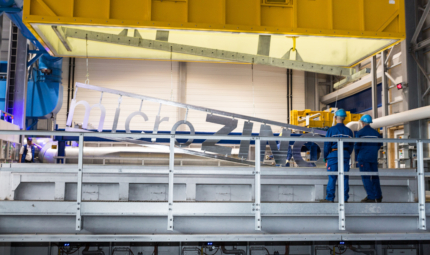
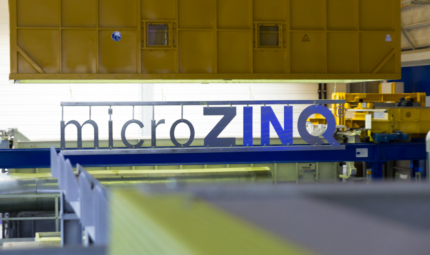
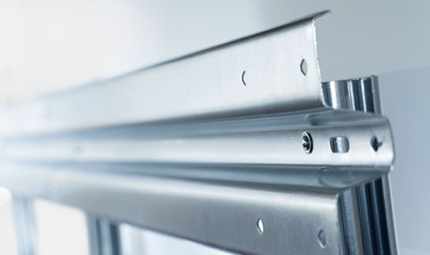
microZINQ stands for innovation. The high-performance surface saves up to 80% zinc compared to conventional piece galvanising in a thin-film process in accordance with DIN 50997 – with the same corrosion protection effect. At the same time, it reduces energy consumption and thus increases energy and resource efficiency.

Explore this program

04/10

ReZINQ – for closed material cycles

Our ReZINQ take-back system enables the separation of zinc and steel by type, allowing them to be recycled in closed material cycles. In this way, we combine approaches such as reuse, refurbishment and remanufacturing with a voluntary take-back commitment – for circularity of the highest quality.

Explore this program

05/10

ZINQ CO2 bank – credits for CO2 savings

Since 2021, we have been recording the CO₂ emissions of our duroZINQ®, microZINQ® and ecoZINQ® branded coating products according to the framework for Product Carbon Footprints (ISO 14067) and documented in environmental product declarations (EPDs) in accordance with EN 15804. Based on the third party validated data on the life cycle environmental impact of our products we allocate the respective CO₂ savings to all and each customers in the form of carbon credits. This means that ZINQ customers – by choosing a durable, circular, low-carbon coating – benefit from a reduced product-related carbon footprint and concrete carbon credits equal to their savings.

Explore this program

06/10

Power2ZINQ – decarbonising process heat with hydrogen

To decarbonise industrial process heat, ZINQ is working on switching from natural gas to carbon-free energy sources. At its Gelsenkirchen site, the company has developed innovative plant technology that enables CO₂-neutral process heat generation using green hydrogen. The adaptation of burner technology and plant control systems to mixed gases or pure hydrogen is being carried out in collaboration with regional partners in a consortium project.

Explore this program

07/10

Digital Circular Product Passport – for a sustainable, competitive circular economy

Product passports make circular quality transparent: ZINQ is therefore developing Digital Circular Product Passports (DCPP) to create transparency and validated, trustworthy data as a basis for the further development of circular innovations in ZINQ coatings and in customers‘ products.

Explore this program

08/10

The hunt for the last calorie – efficient processes for sustainable products

Since 2010, ZINQ has been working consistently on resource-efficient production. Optimised furnace technology, the use of waste heat and improved process flows have resulted in solutions that save energy, conserve raw materials and enable products of circular quality.

Explore this program

09/10

Do your ZINQ – our values, our people

As a family business, we have been committed to clear guidelines since 1995: sustainable use of resources, social responsibility and safety. The employee brand Do your ZINQ brings these values to life – through dedicated employees, comprehensive training and diverse development opportunities right up to management level.

More about this key driver

10/10

Our people and innovation are the two most important drivers of realizing our goals

ZINQ Futurium – the place where the future is made

ZINQ Futurium is where innovations for circular products, energy efficiency and sustainability are created. Here, interdisciplinary teams conduct research into innovative processes, while partners from industry and research come together to actively drive forward the transformation of industry.

More about this key driver

This is our race to Triple Zero.

When will you start your Race?
Let us make the transition happen – together!

More circular transition? Let us design your race to Triple Zero!

Contact us

A brief history of our efforts

2003
Measures for greater energy efficiency

The hunt for every last calorie: As a pioneer in Ökoprofit and PIUS projects, ZINQ has continuously invested in energy-efficient plant and process technology, such as high-efficiency burners, heat exchanger systems, frequency converters, LED lighting, etc.

2003
Greater resource efficiency through innovation

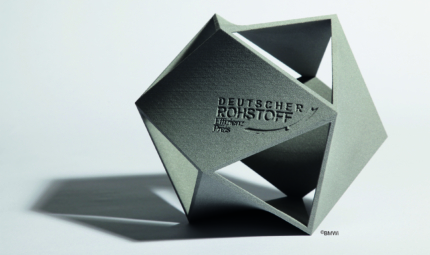
microZINQ® marks the beginning of the development of resource-efficient surfaces. The innovative thin-film piece galvanising process saves up to 80 percent ZINQ (compared to conventional piece galvanising). In 2013, microZINQ is awarded the German Raw Materials Prize.

2010
Switch to Cradle to Cradle (C2C)

ZINQ consistently aligns its products and processes with the principles of the circular economy and develops solutions designed for material health and closed-loop material cycles. Since 2010, the majority of ZINQ products have been certified accordingly and designed to be reused in biological and technical cycles. This is based on the globally recognized standard of the Cradle to Cradle Products Innovation Institute, an international nonprofit organization that promotes circular product design through the “Cradle to Cradle Certified® Products” program and drives the transition to an economy in which materials make a positive contribution to people and the environment.

Carsten Paul
2011
Launch of ZINQ Technology

Through ZINQ Technology, ZINQ is pooling its expertise as a technology service provider focused on innovation and sustainability. The division develops new solutions in the areas of surface treatments, the circular economy, and decarbonization—both for the ZINQ Group and for external partners and licensees.
The focus is on the further development of Planet ZINQ and the ZINQ Futurium as a platform for innovation and sustainable industrial solutions.

2013
First steps towards process decarbonisation

Implementation of measures within the framework of Low Carbon ZINQ for the gradual decarbonisation of processes: conversion to green electricity, electrification of the forklift fleet, comprehensive use of LED lighting, efficient control technology and heat recovery systems, as well as optimised process control in pre-treatment and at the zinc baths.

ZINQ
2013
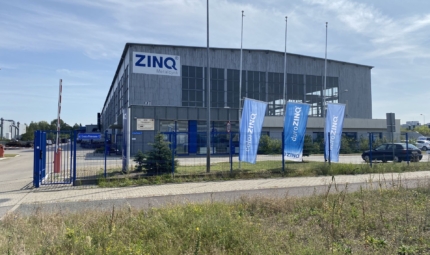
Opening of the plant in Bydgoszcz (Poland)

With the commissioning of the Bydgoszcz site, ZINQ is expanding its production capacities in Eastern Europe.

C2C
2013
duroZINQ® is Cradle to Cradle® certified

duroZINQ® is the first ZINQ hot-dip galvanized surface to receive Cradle to Cradle® certification.

Carsten Paul
2014
Acquisition of the company verticalgalva

ZINQ is acquiring the company verticalgalva, thereby expanding its existing service and location portfolio.

2014
First step towards closing all material cycles

Internal material cycles are closed by processing zinc by-products on specially provided reprocessing lines. This marks the start of the ReZINQ project and the first steps towards closing all material cycles at ZINQ.

BjörnBild
2015
Opening of a 7-meter microZINQ® system in Hagen

At its Hagen site, ZINQ is commissioning a 7-meter system for microZINQ®, thereby expanding the technical possibilities of the process.

2015
microZINQ receives the German Resource Efficiency Award

The award recognizes the technological development of microZINQ® and its efficient use of the material employed.

emove
2015
MATERIALICA Award for microZINQ

ZINQ receives the MATERIALICA Award for its innovative high-performance surface microZINQ®.

BjörnBild
2015
General building authority approval (AbZ) for microZINQ®

microZINQ® has received general building authority approval (AbZ) from the German Institute for Building Technology.

ZINQ
2015
Do your ZINQ: Training climate heroes

The “Mach Dein ZINQ” initiative is all about the targeted development of our employees: from training in five apprenticeship programs and continuing education programs to the development of our own leaders. Currently, 80 apprentices are part of ZINQ and actively contribute to our mission of promoting greater sustainability in the industry.

Frank Fendler
2015
Top 3 in the German Sustainability Award

ZINQ is among the top 3 in the special category of resource efficiency in the German Sustainability Award for the first time.

Frank Fendler
2016
Top 3 in the German Sustainability Award

ZINQ is among the top 3 in the special category of resource efficiency in the German Sustainability Award for the second time.

BjörnBild
2017
microZINQ as an outstanding example of climate protection

The brand’s surface is honored by “Metalle pro Klima” with the Best Practice Award as an outstanding example of climate protection.

C2C
2017
microZINQ® is Cradle to Cradle® certified

ZINQ’s thin-film hot-dip galvanizing process is the second branded surface to be awarded Cradle to Cradle® certification.

2018
Acquisition of Galva Union in France

With the acquisition of Galva Union, ZINQ expands its presence in the French market.

Gigiverse
2019
Power2ZINQ: Kick-off for H2 in process heat

ZINQ is launching a cooperation with the Westphalian University of Applied Sciences, the Westphalian Energy Institute, Küpper Solutions and Gelsenwasser to decarbonise industrial process heat. Using new plant technology, the first prototype application of hydrogen in the field of process heat applications is to be realised at ZINQ’s site in Gelsenkirchen.

Pexels-picjumbo, Montage: RDN/Jens Valtwies
2020
ReZINQ closes cycles

The ReZINQ project combines various approaches to extending product life, such as reuse, refurbishment and remanufacturing, with a voluntary take-back commitment to recycle steel and zinc in separate cycles in circular quality. In a professional ReZINQ process, all zinc-containing process by-products and galvanised steel products are processed so that they can be used as recycled zinc.

ZINQ
2021
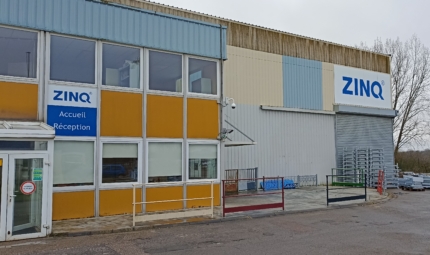
Expansion through the acquisition of three plants in Normandy

ZINQ is integrating three more galvanizing plants in Normandy into the group.
Julian Schäpertöns
2021
ZINQ is a founding member of Klimahafen

Germany’s largest cluster for the decarbonisation of industrial process heat applications in small and medium-sized enterprises is being established in Gelsenkirchen. As a founding member, ZINQ is part of this initiative and is demonstrating how it works with Power2ZINQ. At the Gelsenkirchen site, innovative plant technology will be used to convert the first prototype application of hydrogen (H2) in process heat, initially using hydrogen-rich energy gas (60% H2), and thus prepare it for use with green hydrogen. ZINQ has been working on the technical requirements for this conversion since 2016.

RDN/Jens Valtwies
2021
Customers receive CO₂ credits

The ZINQ CO₂ Bank is introduced. ZINQ balances the CO₂ emissions and savings of duroZINQ and microZINQ hot-dip galvanised surfaces on the basis of environmental product declarations (EPDs). The savings are credited to all customers in Germany as carbon credits on their CO₂ account.

ZINQ
2022
Acquisition of seven more plants in France

ZINQ is further expanding its French corporate structure through the acquisition of seven additional locations.

ZINQ
2022
Reducing the product-related carbon footprint

Low Carbon ZINQ implements a comprehensive strategy for decarbonising surfaces. This involves reducing product-related CO₂ emissions over the entire life cycle and thus the so-called product carbon footprint (PCF) of ZINQ surfaces. This is achieved through the use of recycled zinc and CO₂-reduced primary zinc, as well as central measures for greater efficiency and effectiveness.

Gigiverse
2022
ZINQ Futurium: Developing sustainable innovations

This is where the future is being shaped. With the ZINQ Futurium, the research and development center for ZINQ technology, ZINQ has created a platform for exchange and knowledge transfer. ZINQ engages in dialogue with employees, customers, suppliers, and political representatives, fostering collaboration on the path toward a circular economy. Robert Habeck, then Federal Minister for Economic Affairs, has also been a guest at the ZINQ Futurium.

ZINQ
2023
Introduction of digital circular product passports

To implement the European Commission’s Sustainable Product Initiative, ZINQ is introducing digital circular product passports in the supply chain. This makes ZINQ one of the first companies in Germany to implement transparent proof of the circular quality of products.

ZINQ
2023
Launch of the environmentally optimized interface ecoZINQ

Thanks to the measures implemented in the Low-Carbon ZINQ program and the exclusive use of CO₂-reduced primary zinc from renewable energy sources, the ecoZINQ brand surface achieves top marks in its CO₂ balance. ecoZINQ saves 185 kg of CO₂ per ton of steel – compared to high-quality coating systems. ecoZINQ is also Cradle to Cradle® certified. These savings are credited to ZINQ customers in the form of carbon credits.

ZINQ
2024
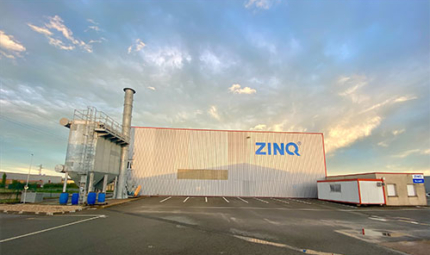
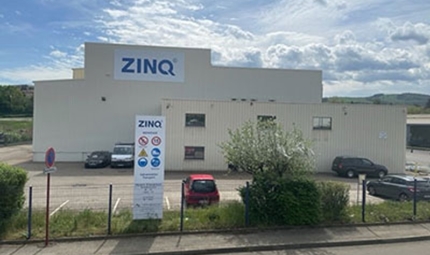
Acquisition of the ZINQ Beaujolais plant

The Beaujolais plant will become part of the ZINQ Group and will complement the existing network of sites in France.

Schmitz Cargobull AG
2024
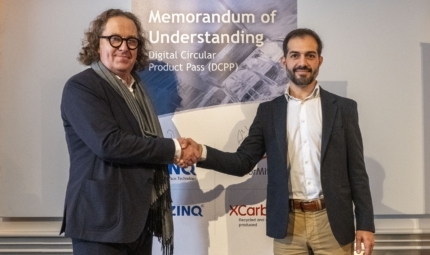
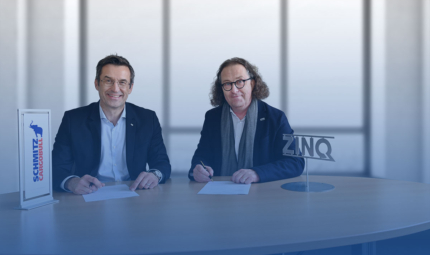
Cooperation Schmitz Cargobull DCPP

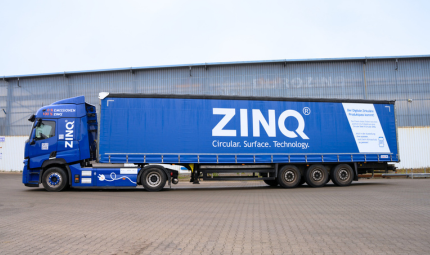
The partnership between Schmitz Cargobull and the ZINQ Group, which has been in place for almost 25 years, has been expanded to include a forward-looking component. Dr. Günter Schweitzer and Lars Baumgürtel have entered into a cooperation agreement in the spirit of the circular economy with the aim of making transparent environmental data usable along the value chain. As a first step, both companies are developing a digital circular product passport (DCPP) for vehicle construction.

ZINQ Lorraine
2025
Expansion of the works through the acquisition of the ZINQ Lorraine plant

With the Lorraine site, ZINQ is expanding its industrial presence in Europe.

BjörnBild
2025
Expansion of the microZINQ® application in the field of fire protection

microZINQ® will also be considered for applications with increased fire protection requirements by 2025. This expands the range of applications for zinc surfaces and addresses specific technical requirements in safety-relevant building applications.

Arcelor Mittal Steligence
2025
Cooperation with Arcelor Mittal

As part of the partnership with ArcelorMittal, the digital circular product passport (DCPP) will be applied to the construction industry for the first time. The aim is to promote the use of circular and low-carbon materials and create transparency throughout the entire product life cycle. This will provide a data-based foundation for sustainable decisions in the construction sector—and for the use of circular solutions such as XCarb® and ecoZINQ®.

ZINQ / Volker Beushausen
2025
Winner of German Environmental Award

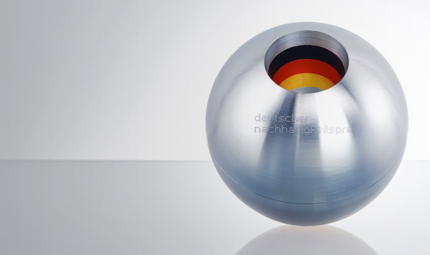
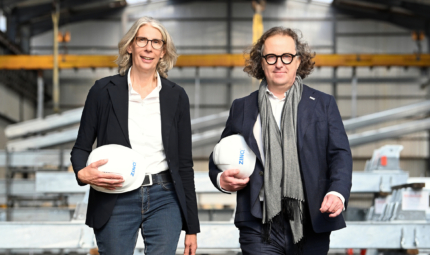
The German Federal Environmental Foundation (DBU) awards the German Environmental Prize 2025 to Dr Birgitt Bendiek and Lars Baumgürtel for their circular business model Planet ZINQ.

Dr. Birgitt Bendiek

+49 178 3876 006

planet@zinq.com

01/10

On the way to zero waste and zero pollution with processes and products according to Cradle to Cradle

For more than ten years, we have been acting according to the five criteria of Cradle to Cradle® (C2C) criteria for more than ten years – with the aim of closing material cycles for products and processes and recycling the raw materials and products used. All ZINQ batch galvanising surfaces are Cradle to Cradle certified. They are developed and manufactured in such a way that, as material-healthy products, they can be used completely and repeatedly in biological and technical cycles to produce new surfaces.

The Cradle to Cradle certified products duroZINQ, microZINQ and ecoZINQ meet strict circular quality requirements. The C2C assessment takes into account the entire supply chain and the entire life cycle of the respective product.

The batch galvanised surfaces produced by ZINQ in Germany alone save more than 45,000 tonnes of CO₂ per year over their entire life cycle as Cradle to Cradle products. Today, ZINQ generates around 90 per cent of its turnover with Cradle to Cradle products alone.

02/10

To zero carbon with Low carbon ZINQ

The path to zero carbon leads through the Low-carbon-ZINQ-programme, with which we continuously reduce our product-related CO₂ emissions throughout the entire life cycle, thereby also reducing the product carbon footprint (PCF) of our ZINQ surfaces.

The Low Carbon programme began more than ten years ago with the switch to green electricity. This was followed by numerous individual measures to increase efficiency and effectiveness in our production processes. These include more efficient control technology, the use of heat recovery systems, optimised zinc bath management and the switch to electric forklifts and LED lighting in all plants. With these many individual measures, we have been able to significantly improve the carbon product footprint of our branded products – and, overall, make zinc into low-carbon ZINQ.

In the next step, we worked with zinc suppliers, including a stake in a recycled zinc manufacturer, to develop a strategy for reducing the carbon footprint of the zinc used. The result is the environmentally optimised ecoZINQ surface, which achieves new best values in terms of product carbon footprint through the use of exclusively CO₂-reduced primary zinc from renewable energies.

In order to decarbonize industrial process heat, ZINQ is focusing on green hydrogen in addition to renewable electricity. In order to replace the carbon-rich energy source natural gas with climate-friendly hydrogen in the long term, ZINQ has been working on the technical preparations for converting the plant in Gelsenkirchen since 2016 as part of Power2ZINQ. At the same time, ZINQ is working to ensure that hydrogen becomes acceptable in industrial process heat and that energy-intensive SMEs can obtain hydrogen at competitive prices in the future.

Another part of the programme is to increase the proportion of CO₂-reduced primary zinc and low-CO₂ secondary zinc in the product. Together with zinc suppliers, the zinc required for the production of surfaces is being decarbonised and, at the same time, the ReZINQ programme is developing appropriate sources for recovered zinc, which introduces up to 30 times less CO₂ into the supply chain.

03/10

microZINQ®: Raw material and energy efficiency in the process and in the product

Innovations must be sustainable, and sustainability is inconceivable without innovation – our brand product microZINQ®) is a perfect example of this. The high-performance surface saves up to 80% zinc compared to conventional piece galvanising while providing the same corrosion protection in a thin-film process in accordance with DIN 50997. At the same time, energy is saved in the process – further increasing energy and resource efficiency. In 2013, microZINQ was the first piece galvanising process to be awarded the German Raw Materials Efficiency Prize by the Federal Ministry for Economic Affairs and Energy.

microZINQ has its origins in ZINQ Futurium, ZINQ’s research and development centre in Gelsenkirchen. The aim was to develop a zinc coating that requires significantly less zinc and thus saves resources. This led to the creation of microZINQ, a binary piece galvanising process that uses a zinc melt with a zinc-aluminium alloy consisting of 95% zinc and 5% aluminium. Thanks to the innovative thin-film process, microZINQ has an average layer thickness that is approx. 5–15 µm thinner than that of conventional piece galvanising. The zinc bath temperature is also reduced from around 450 degrees to 420 degrees through the use of a boiler for the zinc-aluminium alloy.
Overall, microZINQ saves valuable resources in both the product and the process – through significantly reduced zinc usage, the associated weight reduction and lower energy requirements.

In addition to energy and resource efficiency, microZINQ is characterised by special technical properties for the protection of components – especially in the automotive sector. In 2018, ZINQ granted the first technology licence for microZINQ to a German car manufacturer, which was able to replace its existing coating plant with a more environmentally friendly and efficient process. MicroZINQ has now been used millions of times on underbody chassis parts, among other things, where the system’s high resistance to corrosive and mechanical stress during driving has been confirmed. In this way, microZINQ is making a small contribution to making processes in the automotive industry more efficient.

microZINQ has received multiple awards. In addition to the German Raw Materials Efficiency Award, the brand surface received the MATERIALICA Award in 2015 and general building approval (AbZ) from the German Institute for Building Technology. In October 2017, it received the Best Practice Award from ‘Metalle pro Klima’ as an outstanding example of climate protection.

04/10

ReZINQ take-back system closes material cycle fot hot-dip galvanized steel

Circular material cycles are the biggest lever for climate protection in industry. Our goal is therefore to achieve closed product cycles that exclude materials that stand in the way of recycling in circular quality. ReZINQ combines various approaches to extending product life, such as reuse, refurbishment and remanufacturing, with a voluntary take-back commitment to recycle steel and zinc in separate cycles in circular quality.

Our ReZINQ take-back system enables the separate recycling of zinc and steel in a single-type recycling process. As Europe’s largest hot-dip galvanising service provider, we offer all customers the opportunity to return old galvanised components free of charge so that the zinc coating can be separated from the steel in a chemical zinc mine at the end of its useful life before the zinc and steel are recycled separately in closed cycles. In this way, we are making an important contribution to closing the cycle for hot-dip galvanised end-of-life products.

As a result, we can use more and more recycled zinc of primary quality and reduce our CO₂ emissions.

05/10

ZINQ CO2 Bank credits customers with carbon credits for CO2 savings

The specific product carbon footprint (PCF) of the surfaces is verified in environmental product declarations in accordance with EN 15804, audited and validated by a third party. To determine the value, ZINQ compares the low CO₂ emissions of the respective brand product over its entire product life cycle with a standard quality paint coating currently available. The resulting difference in favour of the durable zinc surface yields the specific total CO₂ savings achieved over the entire life cycle and through effective recycling at the end of the product’s useful life.

With the EPD according to EN 15804, ZINQ can measure the environmental impact of its products very accurately and provide concrete evidence of its carbon footprint. This gives ZINQ customers transparency and certainty when recording the product carbon footprint in what is known as Scope 3. Third-party validated data is necessary to fulfil existing and future reporting obligations to customers and legislators – both within the framework of the Supply Chain Act and at EU level for sustainability reporting.

06/10

Prototypical initial application of hydrogen in the fieils of process heat applications

Germany’s largest cluster for the decarbonization of industrial process heat applications in SMEs is being established in Gelsenkirchen. ZINQ is a founding member of the Klimahafen Gelsenkirchen initiative and is working with Power2ZINQ to
convert production to carbon-free energy sources. At the Gelsenkirchen site, innovative plant technology will be used for the first prototypical application of hydrogen (H2) in process heat. The long-term strategy is to replace natural gas with hydrogen.

In addition, a solution is being developed that will enable the many industrial process heat applications in Germany to be flexibly hybridized. The basis for this is what is known as energy carrier coupling: if there is too little electricity in the grid, the production process runs on natural gas or hydrogen; if there is too much electricity in the grid, heat is generated from the surplus electricity and used in the process. This way, instead of curtailing (renewable energy plants), the demand from process heat is made more flexible in line with the energy transition, and a potential on the scale of 40 billion cars that are bidirectionally charged and discharged is tapped.

At Gelsenkirchen Climate PortZINQ has joined forces with 16 other energy-intensive companies from the city port to jointly promote the decarbonization of process heat. The aim is to rapidly expand the hydrogen infrastructure and provide green hydrogen in order to drive forward the transformation of the economy towards climate neutrality. A study commissioned by the initiative confirmed the importance of company-specific transformation paths that take green hydrogen into account for the decarbonization of process heat.  The aim is to rapidly develop the hydrogen infrastructure and supply green hydrogen in order to drive forward the transformation of the economy towards climate neutrality. A bottom-up study commissioned by the initiative confirmed the importance of company-specific transformation paths that take green hydrogen into account for the decarbonization of process heat.

On this basis, the current follow-up study shows: A dual-purpose energy infrastructure with energy source coupling is the basis for maintaining the competitiveness of industrial process heat applications in Germany. This is because the flexibility gained from implementing such smart power-to-heat (SP2H) technology makes efficient use of surplus electricity and relieves pressure on the electricity market by providing base load power in line with demand. It is also four to five times more cost-effective than large stationary storage facilities.

Power2ZINQ is an important building block on the path to decarbonizing process heat.

07/10

Competitive advantage for circular products with DCPP

Product passports make circular quality transparent: ZINQ is therefore developing Digital Circular Product Passports (DCPP) to create transparency and validated, trustworthy data as a basis for the further development of circular innovations in ZINQ coatings and in customers‘ products.

The Digital Circular Product Passport (DCPP) is an important tool that provides comprehensive information on the environmental impact, material composition and recyclability of products in a standardised, digital format. It enables companies and consumers to make informed sustainable choices and supports the development of products that fully comply with the principles of the circular economy. The DCPP offers our customers a competitive advantage when developing and manufacturing the most environmentally friendly products together with ZINQ.

In collaboration with partners and suppliers, ZINQ has developed a Digital Circular Product Passport (DCPP) for a commercial vehicle chassis based on standardised environmental product declarations (EPDs in accordance with EN15804). This covers the entire process from the supply chain to the end of the life cycle (Scope 1-4). The DCPP shows significant CO2 savings through the use of durable and recyclable products. ZINQ is therefore already aligned with the European Commission’s initiative for sustainable products.

08/10

The hunt for the last calorie – efficient processes for sustainable products

Since 2010, we have been working continuously on resource-efficient production in order to make our processes more sustainable. To this end, ZINQ develops innovations for greater sustainability at its ZINQ Futurium research and development centre.

The hot-dip galvanising process is resource-intensive. In addition to energy, large quantities of the raw material zinc are used. In return, however, customers receive a durable product of circular quality. At the end of its service life, both hot-dip galvanised steel and zinc can be recycled as often as desired and in closed material cycles without any loss of quality. In order to optimise the use of resources and material cycles for the process and product and to make the circular quality of the product measurable, ZINQ’s piece-galvanised surfaces are certified according to Cradle-to-Cradle® standards.

Since 2010, ZINQ has initiated and implemented numerous measures to improve resource efficiency. These include optimising furnace technology and organisational processes to reduce thermal losses in the galvanising kettle, as well as optimising energy efficiency through the use of waste heat. With the development of the binary piece galvanising process microZINQ®, ZINQ achieves high raw material and energy efficiency in the process and in the product. Up to 80% zinc is saved compared to conventional piece galvanising, while maintaining the same level of corrosion protection.

09/10

Do your ZINQ combines sustainable action and social responsivility for our employees as an employer brand

ZINQ is a family business with values developed from tradition that guide our daily actions. With the employee brand Do Your ZINQ, we have made a commitment to our values and to our employees, who, as climate heroes, carry the content of our circular business model into the company and anchor it there.

Since 1995, our corporate values have been defined in five guidelines and have remained unchanged since then. One of these values places the sustainable use of resources and the environment, as well as the safety of our employees, at the centre of our actions. For us, sustainable action and social responsibility go hand in hand, which is why we have bundled these values in the employee brand Do Your ZINQ. As ambassadors of our values, our employees are an essential part of our circular business model and ultimately become ambassadors through their sustainability-oriented work.

We see vocational training as part of our corporate responsibility to enable young people to participate equally in society and to lay the foundations today for providing a skilled workforce tomorrow. For this reason, ZINQ has been training more than the number of apprentices required for many years.

Under the umbrella of our employee brand Do Your ZINQ, we offer career starters and our employees a wide range of training and further education opportunities, as well as our own commercial training programme, which is unique in the industry, with our own vocational school class in Gelsenkirchen. Twenty years ago, we took on the first cohort of our process mechanics for coating technology and have been training in this and other commercial professions ever since. We currently offer a total of over 80 trainees on their way to a career at ZINQ after completing their training or a dual study programme a transparent perspective up to management level through a talent programme. More than 75% of our managers come from our own training programme – that is the core of Do Your ZINQ!

More about our people

10/10

ZINQ Futurium – space for innovation and knowledge transfer

With ZINQ Futurium, we have created a platform for communication, networking, knowledge transfer and innovation. Here, we share our knowledge of circular business models with employees, customers and suppliers and cooperate with partners from industry and research on the path to a circular economy.

ZINQ Futurium includes our research and development centre with over 1,300 square metres of floor space, including two alloy on demand piece galvanising pilot lines and an automation and robotics centre. ZINQ also operates the most modern laboratory in the piece galvanising industry on an additional 180 square metres. An interdisciplinary team develops new processes and applications related to the core process of piece galvanising – for greater energy efficiency and sustainability.

ZINQ Futurium is the place where the future is made. It is also a place where stakeholders come together to discuss future topics such as the circular economy, hydrogen in industrial process heat, and digital circular product passports, to develop ideas, and to jointly drive forward the transformation of energy-intensive industry. ZINQ warmly invites all interested parties to engage in dialogue and collaboration.